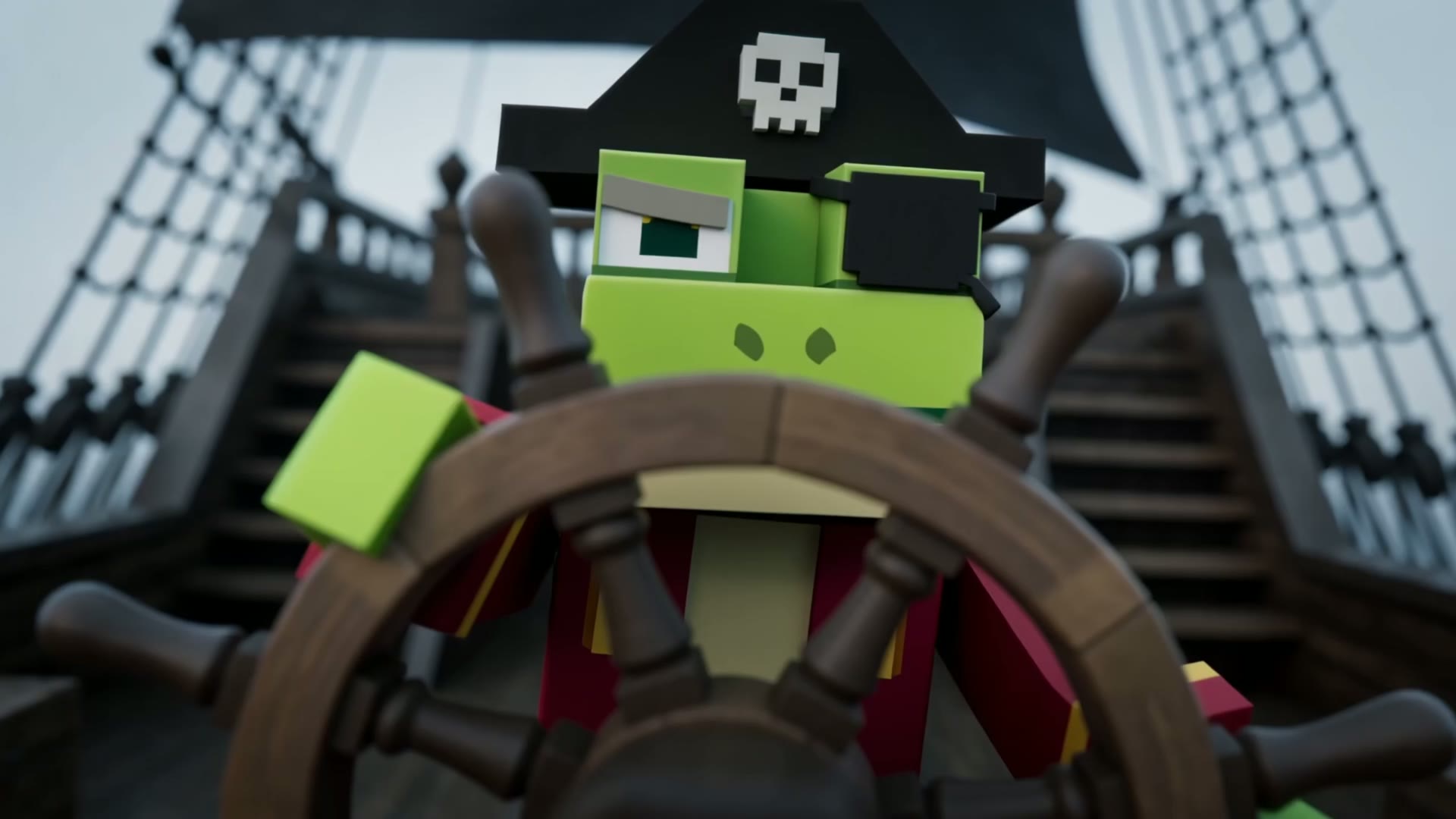
Take the sloop and eat tonight. Take the treasure fleet and you might not come back.
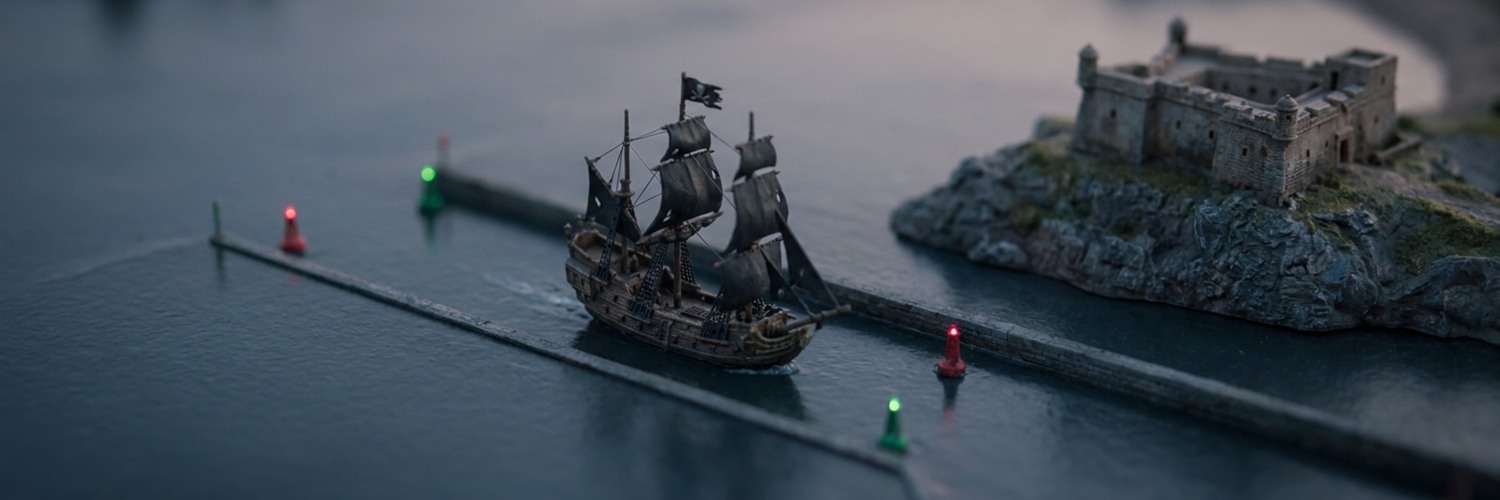
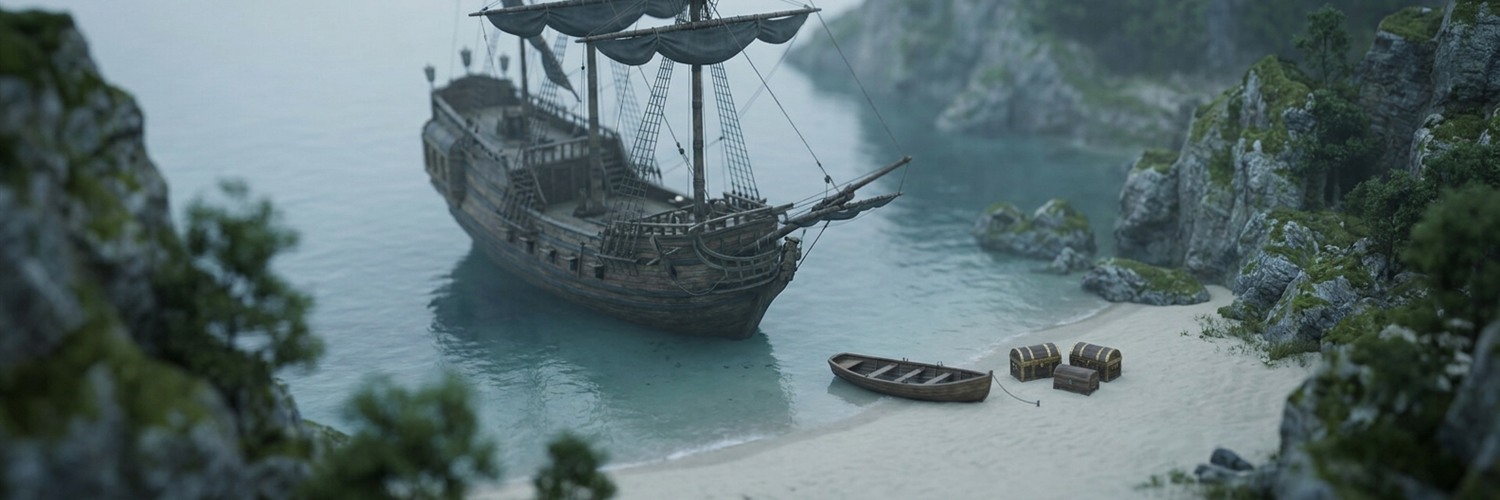

Every cove, every port, every shipping lane already has an owner. That is not a problem. That is the map.
See tonight's raids
Shot in-world, not in a trailer suite. The boarding, the chase and the night it went wrong. Nothing to hide behind.
Open the board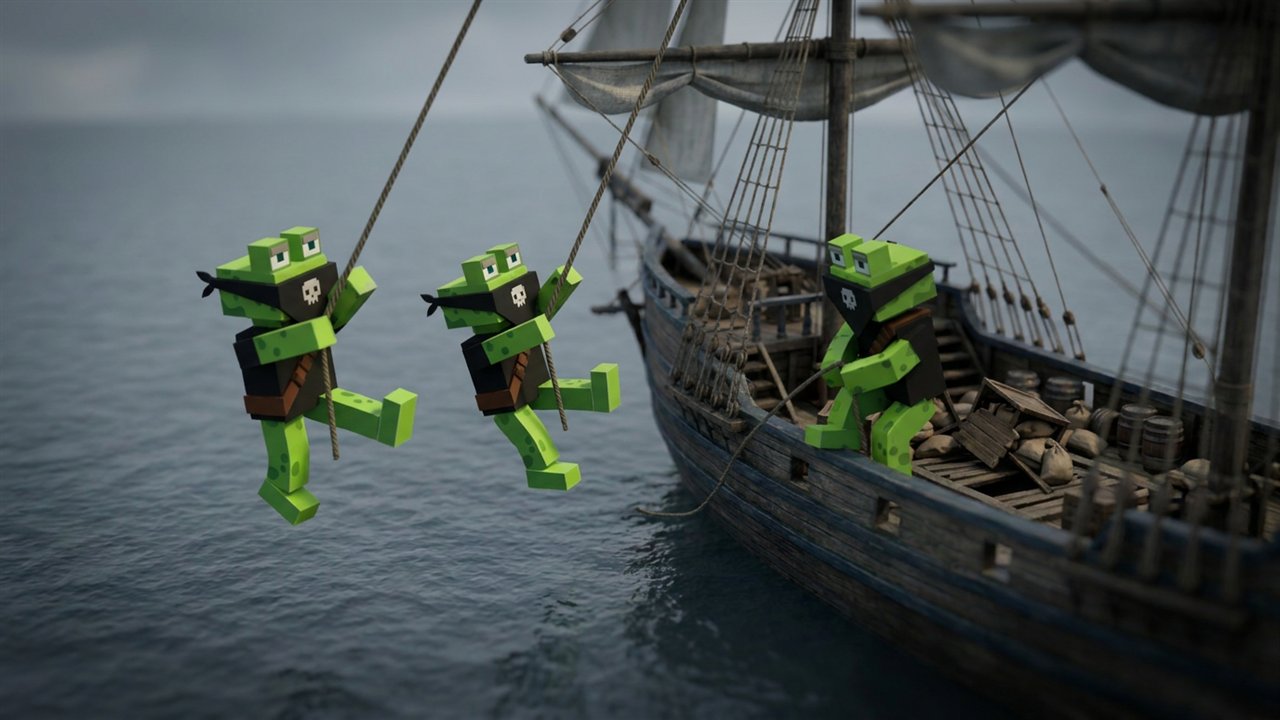
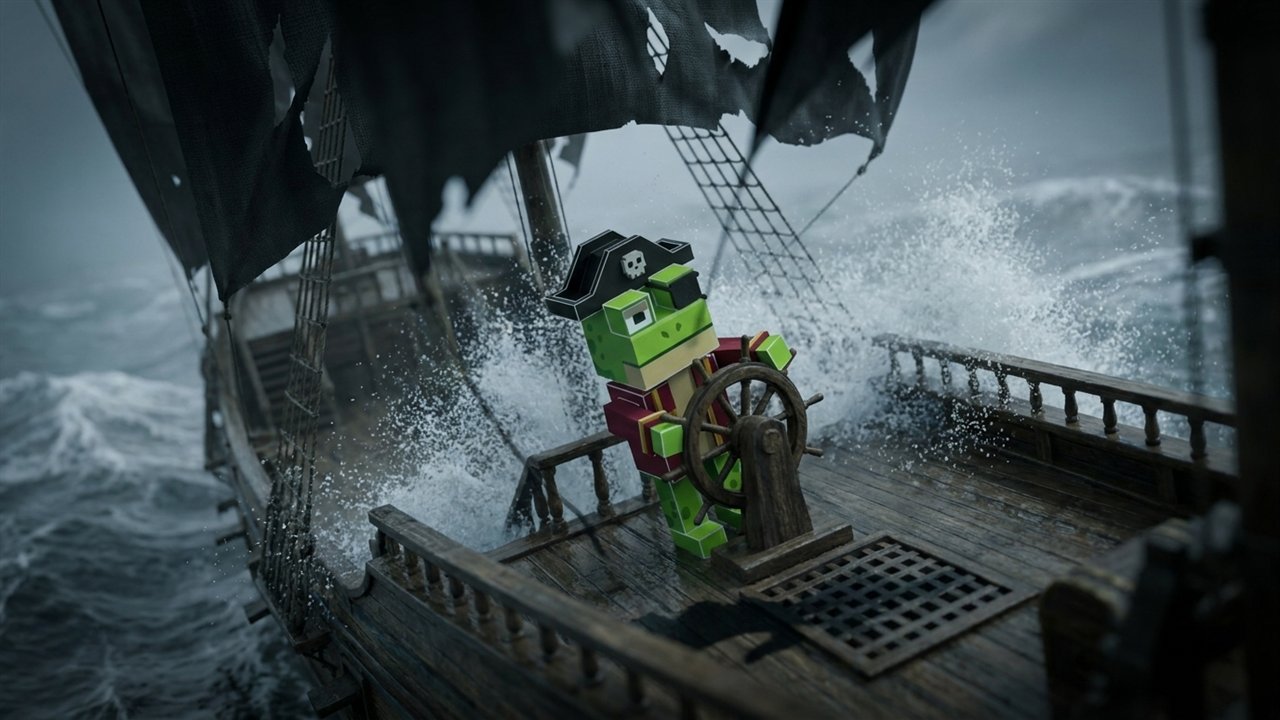
Every Crook signs on with a role. Stack five navigators and you have a boat, not a crew. Cover each other and you take ships you have no business taking.
80 drawn. 777 when the crew is full.
Hit chance, haul range, and what it costs when it goes wrong — posted before you commit. After that it is nerve: which ship you take, and when you break off.
Nothing is asked for before it exists. The rest goes up on X the moment it is locked.
One token, fair launch, fixed supply. No mint to wait for, no allowlist to beg for.
777 Crooks drop to holders. Not a mint you buy your way into. You hold, you get one.
Raids go live on mainnet. The board starts paying real Crook, and everything you spend starts burning.
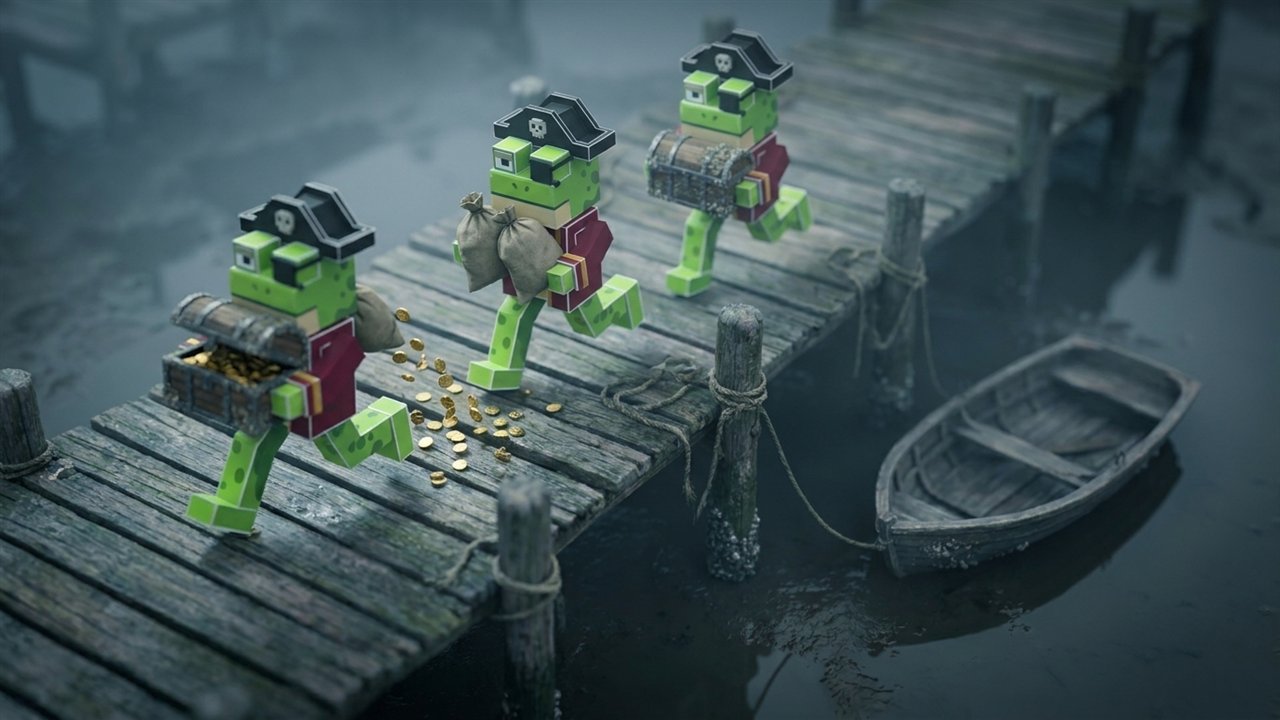
Same build, same stare. The hat, the patch and whatever is in the mouth is how you tell them apart.
Holding Crook at the snapshot is what puts one of these on your wallet. No mint, no allowlist.
Hit chance, haul range and what it costs when it goes wrong — posted before you commit. Connect a wallet and take a ship. The roll is sealed before you choose.
These are sea trials. Every roll is made on our server and signed before you pick a ship, so it cannot be tuned against you. You start with 2,000 Crook. The safe ships pay small and cost you a lot when they miss — that is what makes 92% worth taking and what makes breaking off a real decision. Crook won on the board is a leaderboard score. Raids settle in real Crook on mainnet in phase 03.
One token for every raid, repair, rank and set of colours. Fixed supply on Solana.
Fair launch. No presale, no team allocation, no allowlist. What you see on chain is all of it.
No presale. No private round. Same entry as everyone.
Minted once. Nothing after that.
Everything verifiable. Nothing to take on faith.
Rewards are capped. Burning is not.
Scrubbing your Bounty down burns every token it costs.
Rank and guns cost tokens and give none back.
Flags, coats, colours. Bought and burned.
Get taken and part of the bribe never comes back.
Four straight weeks of burns beating emissions and the daily rate drops for good. It never goes back up. The harder the water gets worked, the less there is to go around. Rates land with the tokenomics.
777 Crooks go out to holders. There is nothing to mint and nothing to win a spot in. Hold Crook, get a Crook.
The manifest is how we find you when the crew drops. Holding is what counts. This just means we know where to send it.
Written down. Holding Crook at the snapshot is what fills it.
Crooks is a raid game on Solana with a fixed supply, no team allocation, and an economy that burns more than it pays.
Most game tokens die the same way: they print rewards until the reward is worthless. This one cannot print. That constraint is enforced at the contract level, not by policy, and everything else in the design follows from it.
A player picks one of four ships. Before committing, the board publishes the hit chance, the payout range and the cost of failure. Those figures are fixed at the moment of commitment and cannot be altered afterwards. The outcome is determined by a server-side roll that is cryptographically sealed before the player chooses, and fully verifiable afterwards.
Two assets exist. Crook is the fungible token that raids pay out in and that every sink consumes. The Crew is a set of 777 characters distributed to holders, not sold.
The odds are published before you commit, the roll is sealed before you choose, and 171 raids of live play have already been measured against the published rates. This is not a roadmap with a render attached — it is a working machine with the parts that are still missing listed by name at the bottom of this page.
Four ships, each with published odds and a fixed cost of failure.
| Ship | Hit | Payout | Cost of failure | Expected value |
|---|---|---|---|---|
| Fishing Sloop | 92% | 40–90 | 700 | +0.5% |
| Merchant Brig | 78% | 120–260 | 680 | −0.2% |
| Spice Galleon | 54% | 500–1,200 | 1,000 | −0.1% |
| The Treasure Fleet | 23% | 2,500–9,000 | 1,720 | −0.1% |
Expected value is calculated as p × mean payout − (1 − p) × cost, expressed as a percentage of the amount at risk. All four ships sit within half a percent of neutral. There is no ship that is mathematically correct to spam, and no ship that is a trap.
Read that column again. There is no house edge to grind against. What differs between the ships is variance, not expectation: the sloop wins nine times in ten and pays a rounding error, and one failure erases a dozen wins. The treasure fleet fails in more than three quarters of attempts and pays up to 9,000 when it does not.
That is deliberate. A board where one ship is mathematically correct is solved on day one and dead on day two. This one cannot be solved — only played well or played badly. The skill is knowing how much variance to hold and when to walk.
Raids are limited to one per wallet per 15 seconds, enforced server-side. This was added after live data showed a single wallet completing 168 raids in ten minutes, which turns a leaderboard into a measure of click rate rather than judgement.
Across 171 raids played by real users, observed hit rates came in at 90.0%, 89.7%, 56.8% and 25.7% against published rates of 92%, 78%, 54% and 23% — every one inside the expected band for that sample. The board does exactly what it says on the tin, and the raid log is public so anyone can re-run the numbers.
The roll is generated server-side and is provable after the fact using a commit–reveal scheme.
Generating outcomes in the browser is trivially manipulated by the player. Generating them on a server requires trusting the operator. This implementation removes the second requirement.
Both the committed hash and the revealed seed are printed on the board after every raid. A player who finds a mismatch has proof of manipulation, and the entire raid history is queryable, so the claim is checkable by anyone rather than only by the person who made it.
Every value below is real. Paste the command into a terminal and you will get the same digest.
The player lost that raid. The point is that they can prove the house did not decide it after seeing the choice — the seed was committed before the ship was picked, and the arithmetic is reproducible by anyone with a terminal.
This proves the operator cannot select outcomes after seeing a player's choice. It does not make the game trustless in the on-chain sense: the seed is generated by our server, and a dishonest operator could in principle generate many seeds and publish a favourable one. Grinding of that kind is detectable in the aggregate, and the full raid log is public for exactly that reason.
Fixed supply. No emissions. Payouts are funded by trading fees, and every sink burns.
Crook launches on a bonding curve with the entire supply available to the market. There is no presale, no private round, no team allocation, no vesting schedule and no locked treasury. Every token in existence is acquired the same way by everyone, including us.
The mint authority is revoked at launch. Supply can never increase. This is the single most important constraint in the model, because it rules out the failure mode most game economies die from: printing rewards until the reward is worthless.
If supply cannot grow, winnings have to come from somewhere real. They come from trading fees. You never buy your own winnings. Win 4,000 Crook and 4,000 Crook lands in your wallet — the pool it comes out of is what we fill, from fees, by buying on the open market.
A share of the creator fees generated by trading is used to buy Crook on the open market, and those tokens sit in the raid pool waiting to be won. Players take nothing to the table but a decision: win and the payout is theirs, lose and the stake burns. There is no faucet, no emission schedule and no treasury unlock — only volume converting into buy pressure, and buy pressure converting into prizes.
Volume generates fees. Every trade, in either direction, adds to the pool.
Fees buy Crook. The pool is filled by market buys, not by minting. Supply pressure is upward before a single prize is awarded.
Prizes pull players in. Winners are paid the full haul out of that pool. A funded board is a reason to hold a Crook and a reason to come back tomorrow.
Play burns supply. Losses, repairs, Bounty scrubs and the black market all destroy tokens permanently.
Burns raise the ceiling. The Ebb Tide converts total burn into permanently larger hauls, which feeds straight back into step 03.
Every loop through that cycle leaves the supply smaller than it started. Nothing about it depends on new buyers arriving to pay old ones — it depends on the board being played, and the board is designed to be worth playing whether the chart is green or red.
The exact percentage of fees routed to the pool will be published here as a number, not a range, before raids settle in real Crook. We would rather leave a blank on this page than fill it with something we might change.
Every use of Crook inside the game removes it from circulation permanently. Nothing recycles back into a treasury.
| Sink | Function |
|---|---|
| Failed raid | Stake is forfeited and burned |
| Bounty scrub | Burn to reduce the price on your head |
| Careen the hull | Repair after a failed boarding |
| Arm the ship | Raise odds on the next raid |
| The black market | Purchase equipment and cosmetics |
| Bribe the governor | Clear Bounty outright |
Losses burn. Winnings are bought. Both arrows point the same way. Net supply falls whenever players lose more than the pool pays out — and with the board at neutral expectation, a rate limit in place and variance doing what variance does, that is the ordinary state of the game rather than the exception.
There is no scenario in this design where the answer to a problem is to print more Crook. That option does not exist.
A fixed share of every burn is recorded against a running total that never resets. As it grows, payout ranges step up in fixed increments. It is a ratchet: it moves in one direction only.
Every token destroyed makes the board pay more for everyone still on it, permanently. Early burn is not lost value; it is the floor under every raid that comes after it. A player who arrives in month six inherits the ceiling that month one paid for.
The Ebb Tide is specified but not implemented. It does not affect the current board.
Trading Crook generates creator fees which accrue to the project. Part funds the raid pool as described above; the remainder funds development and is not disclosed as a fixed split at this stage. We would rather state that plainly than publish a chart that implies more precision than exists.
777 characters, distributed to holders. Not a mint.
There is no public mint, no allowlist and no separate purchase. Distribution is by snapshot of Crook holders. You cannot buy a place in the queue, because there is no queue to buy. Hold the token, get the character.
That also means we make nothing at issuance. The crew is not a second revenue event bolted onto the token — it is what the token is for.
Each character is an individually produced render rather than a script-assembled combination of trait layers. This is why the count rises gradually and is stated as work completed rather than as a launch-day total. The counter on the crew page reads directly from the asset list and cannot show a number we have not produced.
Rarity tiers are visible before distribution: common, rare, silver, gold and three legendaries. There is no hidden reveal and no randomised pack sale.
A per-wallet risk multiplier that rises with activity and is only reduced by burning.
Every raid increases Bounty: a successful boarding by a small amount, a failure by a larger one. Bounty is capped at 96%. Higher Bounty raises the payout ranges offered to that wallet and simultaneously increases what a failure costs. It is a voluntary leverage dial that the player cannot lower except by spending Crook.
The purpose is to prevent an equilibrium where the correct strategy is to grind the safest ship indefinitely. As Bounty climbs, that strategy stops being safe.
Every constant the game runs on, in one place.
| Parameter | Value | Notes |
|---|---|---|
| START_BANK | 2,000 | Opening balance for a new wallet |
| COOLDOWN_MS | 15,000 | Minimum interval between raids, server-enforced |
| BOUNTY_WIN | +4 | Percentage points added on a successful boarding |
| BOUNTY_LOSS | +11 | Percentage points added on a failure |
| BOUNTY_CAP | 96 | Maximum Bounty percentage |
| LOSS_FLOOR | balance | A loss is capped at the wallet's balance; a wiped player can still sail the sloop |
| SEED_LENGTH | 72 chars | Two concatenated UUIDv4 values |
| DIGEST | SHA-256 | Roll from bytes 0–3, payout from bytes 4–7 |
| ROLL_RANGE | 0.00–99.99 | Integer mod 10000, divided by 100 |
| CREW_TOTAL | 777 | Fixed. Berth number is derived from the wallet address |
| SUPPLY | 1,000,000,000 | Fixed at launch, mint authority revoked |
These are the values the server actually runs. When one changes, it changes here and in the changelog below on the same day.
Thin client, authoritative server, public log.
The separation is the point. A player cannot forge a result because the result is not computed where they are, and the operator cannot revise one because the commitment is published before the choice. The public raid log means every claim on this page is auditable after the fact rather than on trust.
Crooks does not request transaction approval, token approval, or a signature of any kind to play. If a site claiming to be Crooks ever asks you to sign something, it is not us.
What shipped, in the order it shipped.
v1.1 is worth reading twice. We shipped a board where every ship was profitable to grind, caught it in simulation over 50,000 hands, and changed the numbers before anyone could build a position on the mistake. That is what the changelog is for.
What is shipped and what is still being built. A build log is worth more than a roadmap.
Most projects ship a landing page and a promise. This one has a working board with verifiable outcomes, 80 finished characters, persistent state and a leaderboard — before the token exists. Everything above the line is shipped. Everything below it is named, dated by intent, and checkable against this page later.
Crook is a game token, not an investment, a share of anything, or a claim on revenue. Its price can go to zero. The raid pool is funded by trading activity, so payouts scale with volume and fall to nothing when volume does. Mechanics described here as pending may change before they ship. Nothing on this page is financial advice.
X is on the board. This chart is not open yet — the ships that are take their raids on the board.